What is the spiritual meaning of sleep apnea?
Introduction
Sleep apnea is typically approached from a medical perspective. However, there’s more to this condition than meets the eye.
Today, we’ll inquire into the lesser-known spiritual dimension of sleep apnea. However, before we go into our topic, we’ll share what exactly sleep apnea is and its symptoms and causes.
What is sleep apnea?
Sleep apnea is a serious medical condition characterized by repeated interruptions in breathing during sleep.
It has two main types: Central Sleep Apnea (CSA) and Obstructive Sleep Apnea (OSA).
OSA, the more common form, happens when the muscles in the back of the throat relax, narrowing or closing the airways.
This reduces or completely stops airflow, leading to lower blood oxygen levels.
The brain senses this inability to breathe and briefly rouses you from sleep to reopen the airway. This awakening is usually so brief that you don’t remember it.
CSA, on the other hand, happens when the brain is unsuccessful in transmitting signals to your breathing muscles, causing you to stop breathing for short periods.
You might awaken with shortness of breath or have difficulty getting to sleep or staying asleep.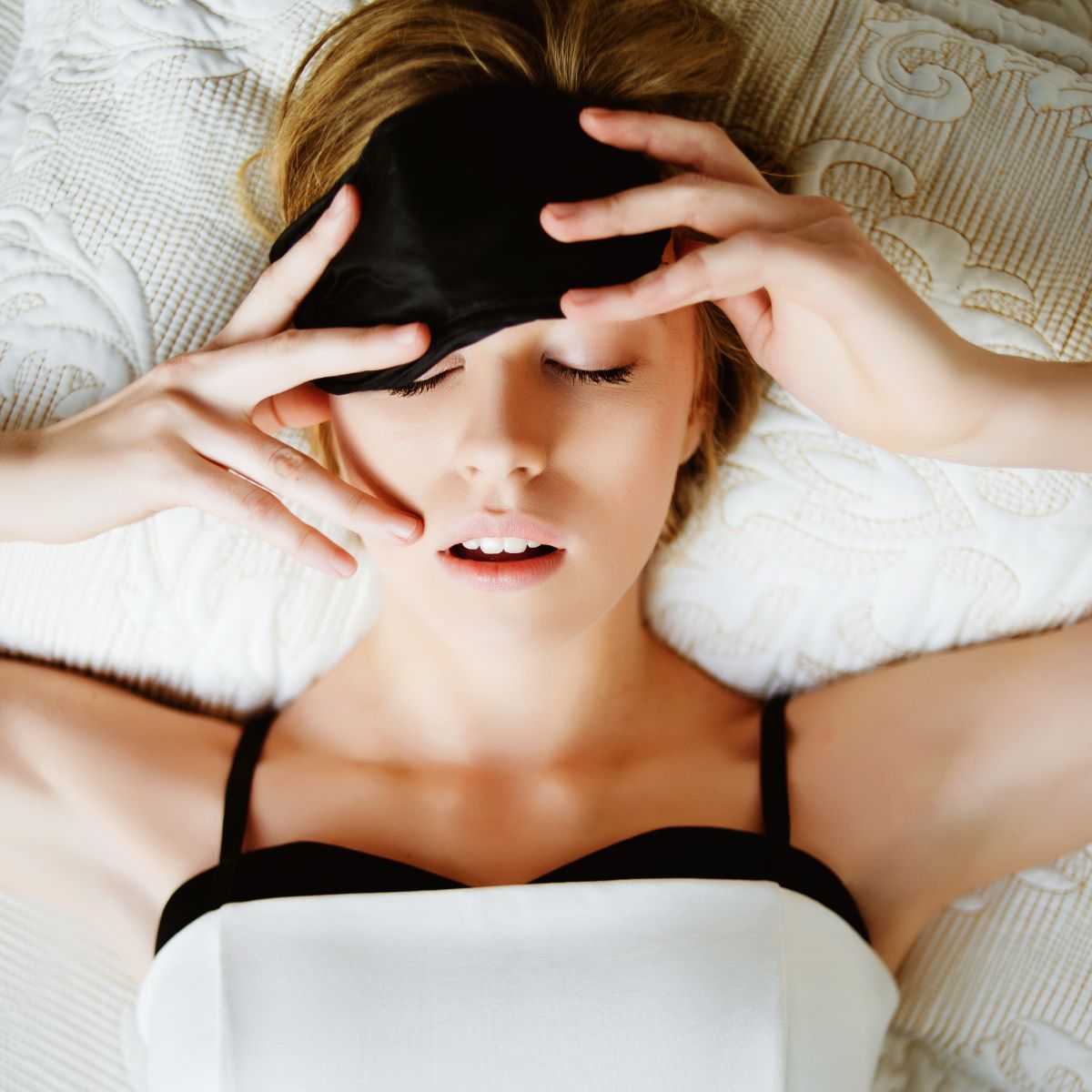
Common symptoms across both types of sleep apnea include excessive daytime sleepiness, loud snoring often punctuated by gasping or choking sounds, restlessness while sleeping, frequent nighttime urination, morning headaches, dry mouth, forgetfulness, mood swings, and a loss of interest in sex.
Daytime fatigue is a major complication of sleep apnea due to the repeated awakenings associated with the disorder.
This can lead to difficulty concentrating, slow reflexes, and an increased risk of accidents.
Over time, untreated sleep apnea can also contribute to chronic conditions such as high blood pressure, heart disease, stroke, and diabetes.
If you suspect you have sleep apnea, it’s essential to consult a healthcare provider. Diagnosis typically involves a sleep study to monitor your breathing and other body functions during sleep.
Treatment options vary depending on the severity of the condition and may include lifestyle changes, the use of a CPAP machine, oral appliances, or, in some cases, surgery.
The Spiritual Meaning Of Sleep Apnea:
Sleep apnea is typically analyzed through the prism of medical science. However, when viewed from a spiritual perspective, this condition reveals deeper insights into our emotional and metaphysical well-being.
The spiritual interpretation of sleep apnea suggests it is an external manifestation of internal emotional turbulence.
The disorder is seen as an indicator of unresolved emotions that we may consciously or unconsciously suppress.
These emotions, when not addressed, simmer beneath the surface of our consciousness and can manifest physically as various health issues, in this case, sleep apnea.
From a metaphysical standpoint, sleep apnea reflects our resistance to confront and resolve these emotions.
Each pause in breath, each gasp for air during sleep apnea episodes, could be seen as a metaphor for our suppressed feelings trying to surface, seeking resolution.
Therefore, the spiritual roots of sleep apnea lie in our reluctance, or perhaps our inability, to address our emotional needs.
In a sense, this condition becomes a mirror reflecting our emotional health.
Every night, as we struggle to maintain a steady breath during sleep, we are reminded of the feelings we have buried and the emotional issues we have chosen to ignore.
Important note – this perspective does not undermine the medical treatment required to manage sleep apnea but rather complements it. It helps you to adopt a more holistic approach to your well-being. Addressing the physical symptoms alone might provide temporary relief, but understanding and responding to the emotional undercurrents could lead to a more comprehensive healing process.
By addressing these suppressed emotions, you work to alleviate the symptoms of sleep apnea and achieve emotional harmony.
The Dreams Connection
Sleep apnea is known to disrupt REM sleep – the deep sleep stage that is crucial for dreaming.
This disruption has implications not only for our physical rest but also for our spiritual well-being, particularly when considering the role of dreams.
From a spiritual perspective, dreams are a bridge between our conscious and subconscious minds.
They are a tool for introspection, self-understanding, and emotional processing. However, in individuals with sleep apnea, the frequency and nature of dreams can be significantly altered.
Studies suggest that those with sleep apnea are more likely to experience nightmares, often involving themes of strangulation, choking, or suffocation.
These disturbing dreams may be the brain’s psychological reaction to the physical event of sleep apnea.
Higher Apnea-Hypopnea Index (AHI) values, indicative of severe sleep apnea, are usually associated with more fragmented sleep patterns and more negative dream content. This suggests a clear correlation between sleep apnea severity and the nature of dreams, further emphasizing the intricate link between our physical and emotional health.
However, it’s important to note that the relationship between sleep apnea and dreams is complex and still not fully understood.
The manifestation of this disorder in our dreams can vary greatly among individuals, and more research is needed to understand the underlying mechanisms fully.
But what is clear is that sleep apnea goes beyond being a mere physical condition; it impacts our emotional and spiritual well-being, as reflected in our dreams.
Emotional Exhalation: Overcoming Sleep Apnea
Sleep apnea usually leads to interrupted sleep.
In spirituality, difficulty in exhaling is seen as a sign of withdrawal into oneself.
It could indicate a lack of deep aspirations, a state of waiting or being stuck, and an inability to express oneself fully.
This spiritual interpretation makes us look inward and address suppressed emotions that might contribute to the manifestation of sleep apnea.
Confronting and resolving these underlying emotional issues is akin to emotional exhalation – a release of pent-up feelings that we’ve been holding back.
This process of emotional exhalation can potentially alleviate the physical symptoms of sleep apnea, fostering personal growth and emotional balance.
While diagnosing sleep apnea might initially seem daunting, adopting a positive outlook can make a significant difference.
Viewing this condition as an opportunity for emotional growth rather than a setback can pave the way for a healthier, more balanced life.
This optimistic approach inspires us to leverage sleep apnea as a catalyst for change, prompting us to prioritize our emotional health alongside our physical well-being.
Spirit began as wind
A sticky note on my monitor says spiritus. Nothing else. In classical Latin the term meant respiration and a current of air, and Etymonline derives it from the verb spirare, “to breathe” Christian authors later made spiritus the usual Latin match for Greek pneuma.
Apnea belongs to the same family of air terms. It entered English medicine in 1719 as apnoea, from Greek apnoia, which Etymonline splits into a- (without) and pnein (to breathe).
Put the two entries side by side, and a single apnea episode becomes, letter by letter, a short spell without spirit, which, no joke, bugged me for a whole day after I first saw it on the screen and wrote it down on the sticky note.
Did any Greek or Roman writer join those dots on purpose? I found no text where one does. So the link stays mine, a hunch from my desk.
The goblin on the chest
Before pulse oximeters (clips which measure blood oxygen through a fingertip), people blamed a creature. Anglo-Saxon speakers called it mære, a goblin of the dark hours, and by the middle of the 1500s the compound nightmare had shifted from the goblin to the feeling of suffocation it caused.
French has a cousin. Cauchemar mixes caucher, medieval French for press or trample, with the same Germanic mare.
A spirit that crouches on a sleeper and squeezes out the air.
Set this image next to obstructive apnea, where the throat and it’s muscles slacken and the airway narrows or shuts, and the overlap gets hard to wave away.
Who blames a goblin now?
I am split on this one: the mære folklore fits sleep paralysis at least as well, and no record lets anyone sort the two apart today, so how much faith someone puts in the goblin depends of temperament, mostly.
Ondine never cursed anyone
In 1962 two physicians, Severinghaus and Mitchell, described three patients who had undergone surgery on the upper cervical spinal cord and afterwards lost the automatic part of respiration (Barrow Neurological Institute).
They named the problem Ondine’s curse, after a water nymph from German legend who, jilted by her mortal husband, stripped him of his automatic functions, so he had to remember to breathe.
Small problem. In Friedrich de la Motte Fouqué’s novella Undine (1811), the water spirit still loves the knight after he betrays her, and a 2020 historical note in Arquivos de Neuro-Psiquiatria states flatly that Ondine never cursed anyone (SciELO).
The curse came from later stage versions, with Jean Giraudoux’s play Ondine as best known.
I find this correction useful for anyone who looks at apnea through a spiritual lens, because a condition named after a hex rests, on closer inspection, on a tale medicine got wrong. No nymph is angry at anybody. No punishment hides in the diagnosis.
Joe from Pickwick, asleep again
Charles Dickens (1812-1870) put a boy named Joe into The Pickwick Papers, a serial from 1836 and 1837. Joe eats, nods off mid-task and wakes red in the face, and a sleep physician who revisited the novel found that Dickens describe the snores in detail (Psychology Today).
I like this detail more than it deserves, since a novelist with no sleep lab (the Charles Dickens Museum did run a 2018 exhibition on him as a man of science, to be fair) put a drowsy snorer on the page about a hundred and twenty years before doctors found a name for the pattern.
In 1956 Burwell and three coauthors used Joe for an executive of fifty-one with the same daytime drowsiness and called it Pickwickian syndrome (JAMA). Newer terms have since replaced the label.
What the body does, what folklore said
I sorted my notes into one row per sign a partner might spot at three in the morning. The doctor column comes last on purpose.
| What it is like | Spiritual or folk take | Body check first |
|---|---|---|
| Weight on the chest | a mære crouched there | Ask a partner to watch |
| A gasp jolts someone awake | the “lesser death” of sleep | GP visit if it repeats |
| Pauses a partner can time | Ondine’s curse, in medical slang | the sleep clinic referral |
| Dreams of suffocation | “the pressing mare” | Mention them to a GP |
| Heavy sleep by day | Joe from Pickwick | Safe to drive now? |
| Headache at dawn | spiritus, “breath” in Latin | a symptom on NHS lists |
| Mood swings by day | Feelings that never got out | GP rules out other causes |
| Air returns after a pause | Neshamah, the puff of life | How many pauses per hour? |
Genesis, the Quran and a nightly return
Hebrew scripture puts air at the start of human life. Genesis 2:7 in the King James Version says: “And the LORD God formed man of the dust of the ground, and breathed into his nostrils the breath of life; and man became a living soul.” (Bible.com, KJV) The Hebrew noun there is neshamah, which Strong’s lexicon glosses as a puff, wind or vital breath (Bible Hub).
The Quran treats sleep as a nightly departure. Surah Az-Zumar 39:42, in the Sahih International translation: “Allah takes the souls at the time of their death, and those that do not die [He takes] during their sleep.” (Quran.com) In his commentary, Ibn Kathir calls sleep the “lesser death”.
Neither verse names a disorder, and I won’t stretch them so far. What they changed for me was the gasp at the end of an apnea episode, which I used to hear as alarm and now also hear as a return.
What I do after a rough night
Two most useful habits for me are a recording and a diary. A phone app which logs snores for a week shows more than memory ever will, and the NHS suggests a partner watch for pauses as well. The HSE in Ireland goes further and recommends a sleep diary with how tired a person feels and how many times they nod off by day.
On the spiritual side, I write down whatever weighed on me before bed, since the emotional exhalation idea from seven headings up works for me only on paper. Next, the mask goes on.
Most of people shrug at a snore, and I did as well for years.
Doctor first
The NHS advises a GP visit for pauses in respiration during sleep, gasps or snorts at night, constant tiredness by day, or morning headaches with poor focus (NHS).
Whoever saw the symptoms can come along to the appointment. In the UK, confirmed apnea with excessive sleepiness means no time at the wheel until symptoms like heavy tiredness are under control, and the DVLA may need to know. None of the beliefs from the table three sections up replace this check.
RELATED TOPICS:
The Spiritual Meaning Of Sleeping A Lot
What does it mean spiritually if you don’t have wisdom teeth?
What Is The Spiritual Meaning Of A Black Bird Flying In Your House?
Spiritual Meaning of Sleep Paralysis
- About the Author
- Latest Posts
Irina is a co-founder and author at AwakeningState.com, an online magazine launched in 2016 that aims to expand consciousness every day. Offering eye-opening articles on a range of topics, Irina strives to provide unique insights into personal growth, covering areas such as spiritual awakening, health, lifestyle, nature, and science.