
Two green coins appear low on the verge, and the body arrives half a second later: a doe, ears up like radar dishes, stopped on the center line while my engine ticks over.
Most of people who type this phrase into a search bar have just lived that exact moment, foot jammed on the brake.
I know the jolt from country lanes in late autumn, and my heart still thumps for a full minute afterward.
Humans looked for messages in that pause long before cars.
In 768, per the shrine legend, a thunder deity named Takemikazuchi came to Nara on the back of a white deer, and the herds around Kasuga Taisha are still protected as messengers of the gods (city tourism office).
So what does a deer on the road mean?
My route to an answer ran through dream dictionaries, a medieval bestiary, a Japanese tourism text and a stack of Bible translations.
Short version, for anyone still on the hard shoulder
The traditions I checked agree on one thing: a deer on the path asks for a slower pace and sharper attention. Christian writers point to Psalm 42 and its thirsty hart. Buddhists picture the park near Varanasi where the Buddha preached his first sermon to five ascetics.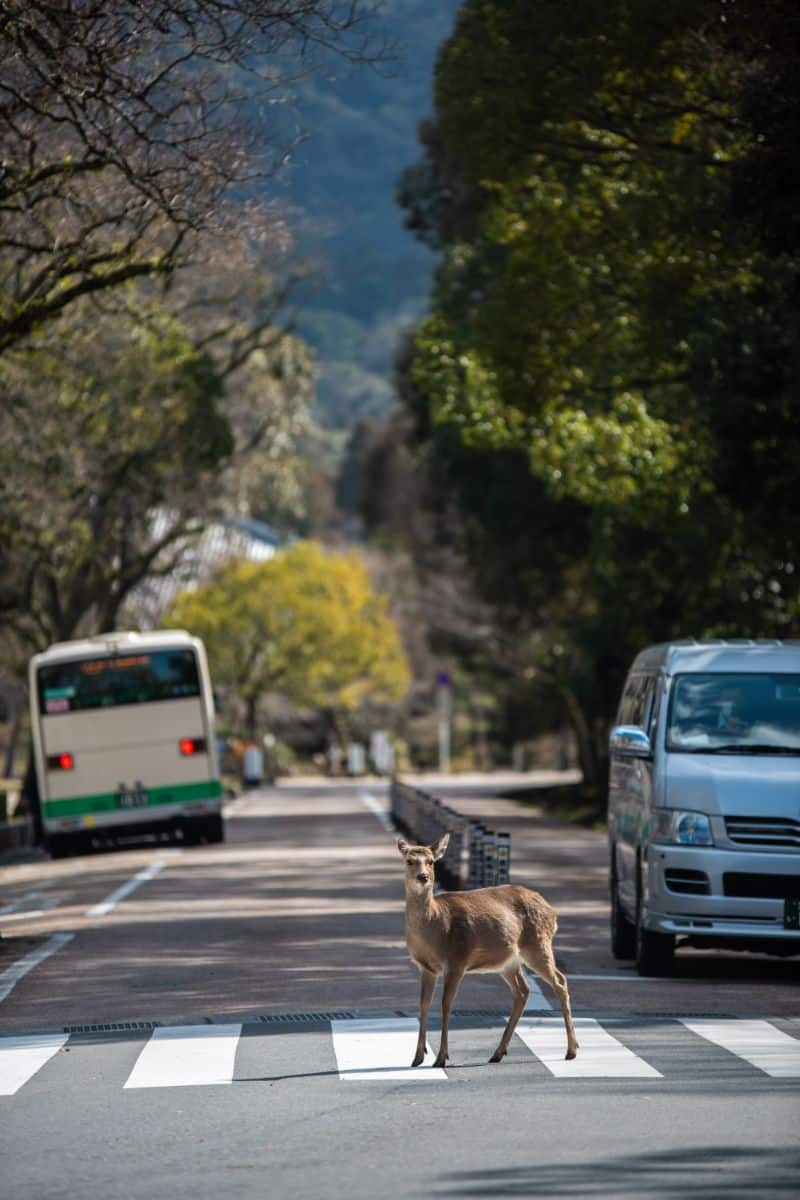
Japan treats the deer as a divine courier, and in Gustavus Hindman Miller’s 1901 dream manual a deer is a favorable omen. No tradition here promises a specific event, so I treat the encounter as a pause button and nothing grander.
Breath, serpents and a cross between the tines
My favorite early image? A silver bowl. Peat cutters near Gundestrup in Denmark pulled a dismantled cauldron out of a bog on the twenty-eighth of May 1891, and on an inner plate a cross-legged figure with antlers grips a torc (a rigid neck ring) while a stag waits at his side (Harvard Celtic collection).
Scholars date the vessel anywhere from about 300 BC to 50 BC. The figure is usually identified as Cernunnos, a name known from a first-century inscription in Paris, though no letter on the cauldron names him.
Medieval Christians had a whole program for the stag. English bestiaries copied it from a Greek text of animal lore, the Physiologus, and illustrated it with care.
A manuscript in the British Library, Royal MS 12 C. xix, made around 1200 to 1210, shows a stag that sucks a snake out of its hole with the breath of its nostrils (British Library).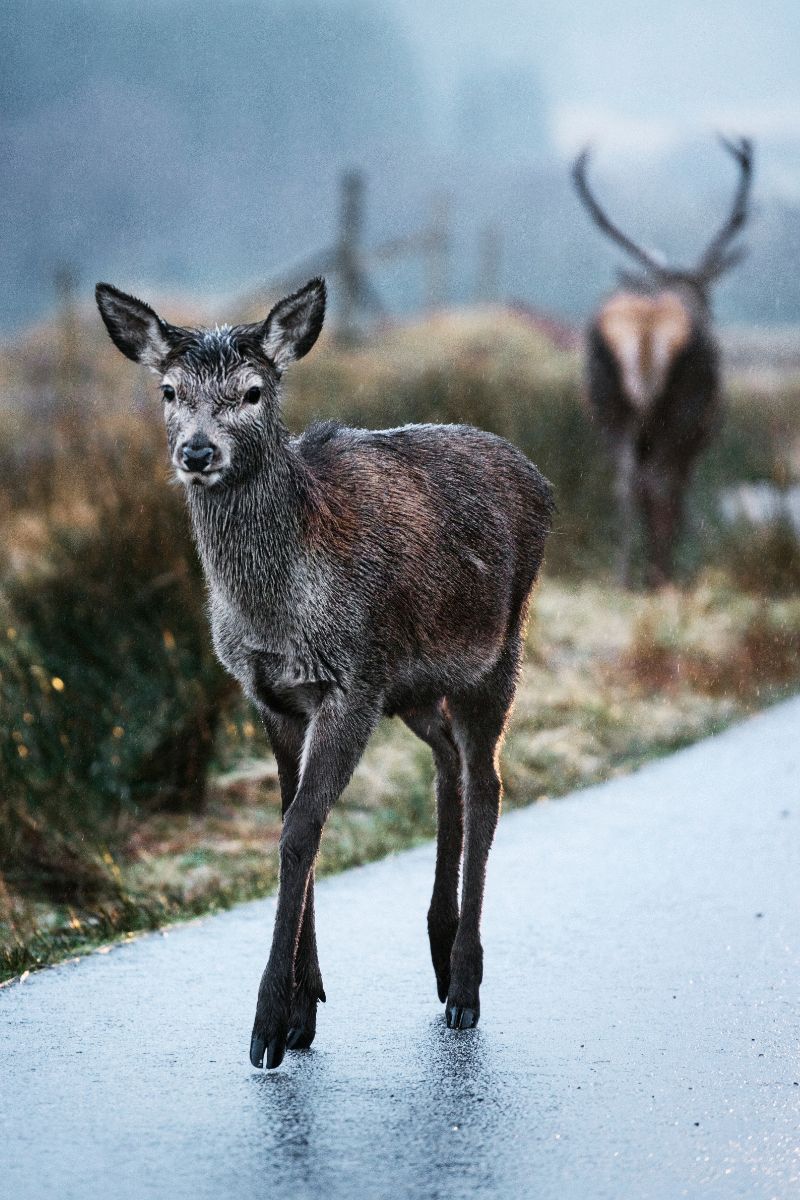
After the meal, so the bestiary says, the beast gulps huge amounts of water against the venom and comes out renewed, and its authors matched all this to Christ’s victory over the devil.
Same manuscripts, stranger detail. When a herd swims a river, each animal rests its head on the rump of its neighbor ahead, and the tired front swimmer drops to the back of the queue.
Hunters love still the tale of Saint Hubert of Liège (c. 656-727). On a Good Friday, while the town prayed indoors, Hubert chased a buck through the Ardennes, and when the creature stopped and faced him he saw a crucifix between its antlers. He quit the chase for religious life and ended as a bishop.
The catch is honest history: the National Gallery in London (which owns a painted shutter of the scene) notes that pictures of his vision do not appear before the fourteenth century, some six hundred years after his death, when his legend merged with the earlier story of Saint Eustace.
I like that wrinkle.
What Scripture does with harts and hinds
Scripture uses the deer as a picture for four things: thirst for God, steady feet, a healed body and a lover at the window. None of these verses deals with omens.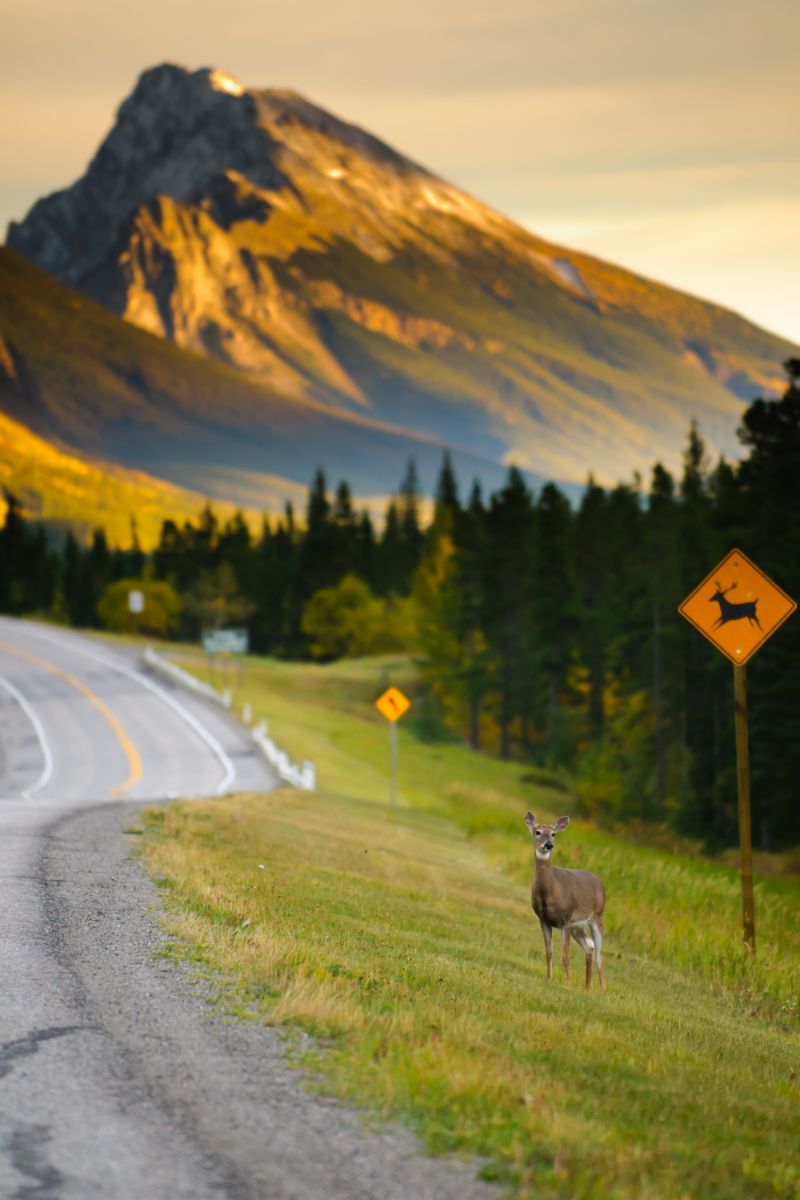
Two most quoted lines come from the Psalms and from a minor prophet.
“As the hart panteth after the water brooks, so panteth my soul after thee, O God.”
That is Psalm 42:1 in the King James Version, or KJV. A small margin note in that edition says the Hebrew under “panteth” is closer to “brayeth”, a noisy cry.
I prefer the margin. Thirst like that is anything but calm, and the very next verse asks “when shall I come and appear before God?”, which matches how a person feels at dusk with shaky hands on the wheel.
Habakkuk closes his whole prophecy with this: “The LORD God is my strength, and he will make my feet like hinds’ feet, and he will make me to walk upon mine high places.” (Habakkuk 3:19, KJV, King James Bible Online).
Harts are female deer (no, wait: the hart is the male and the hind the female, so the prophet asks for a doe’s feet). Almost identical words appear in 2 Samuel 22:34 and Psalm 18:33, “He maketh my feet like hinds’ feet”.
Isaiah 35:6 goes further: “Then shall the lame man leap as an hart, and the tongue of the dumb sing”.
Song of Solomon 2:9 makes the creature romantic, “My beloved is like a roe or a young hart”, and Genesis 49:21 blesses a tribe with “Naphtali is a hind let loose”.
So in Christian circles, a deer crossing your path tends to stir up thoughts of the thirsty animal: a nudge to look for fresh water, or a reminder that heaven steadies a person on steep ground.
A dream site with a Christian slant treats the deer’s quick escapes as a picture of divine protection in hard seasons.
No verse makes the encounter a forecast, and I like that restraint.
Ireland, Nara, Sarnath and the Sierra Madre
Patrick’s mist
The prayer called Saint Patrick’s Breastplate survives in the eleventh-century Liber Hymnorum with a prose preface. High King Lóegaire set an ambush to stop Patrick before he got to Tara, and the men in ambush saw “wild deer with a fawn (Benén) following them”.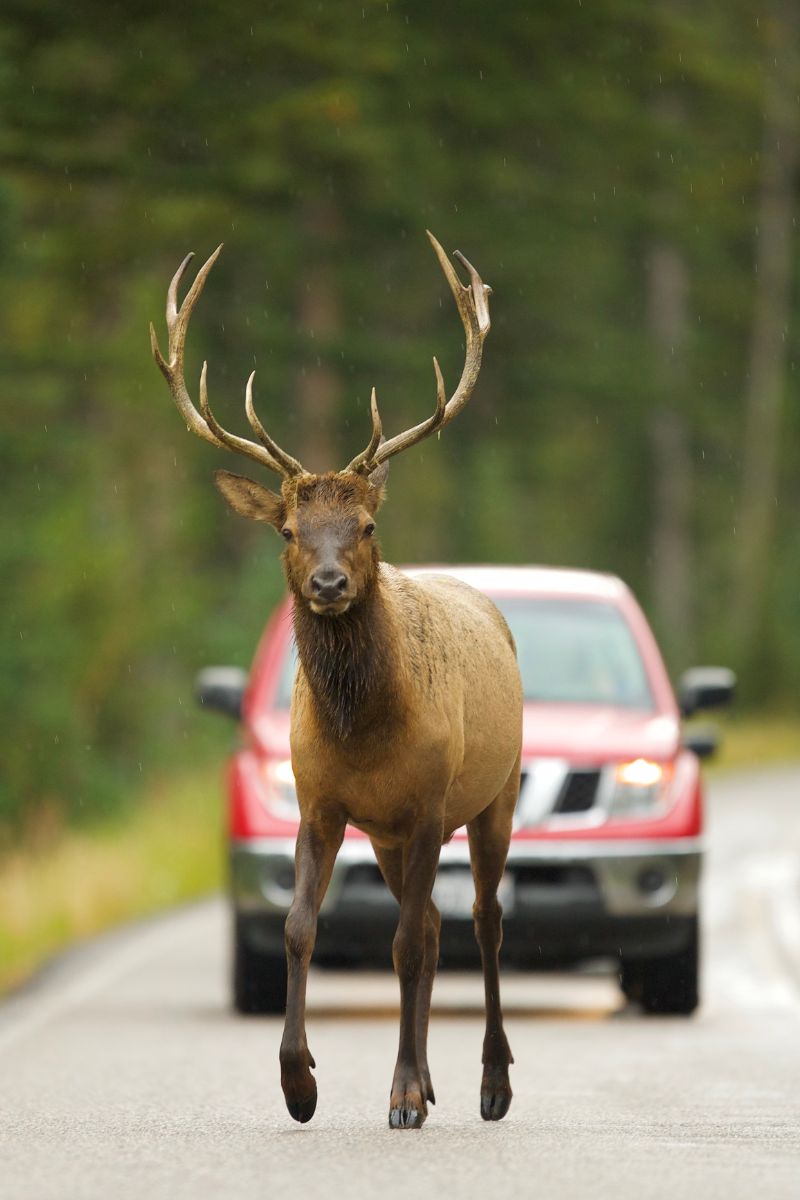
Its medieval editor titled the hymn “Deer’s Cry”, while scholars today derive the Irish phrase fáeth fiada from féth fíada, a magic mist of concealment that the Tuatha Dé Danann used to vanish from human sight. I love both versions.
Kasuga’s courier
Takemikazuchi, in the shrine story, traveled from Kashima Shrine in today’s Ibaraki Prefecture to Mount Mikasa on his pale mount. Because of that journey, sika deer in the city were treated as sacred for centuries, and in the past to kill a deer was punishable by death. Harsh law.
After the Second World War the herds lost their official divine status and became a designated natural monument. Japan’s transport and tourism ministry puts the count in Nara Park at about thirteen hundred wild deer.
Two deer under a wheel
Buddhism started in a deer park. The Buddha’s first sermon happened at Mrigadava, the deer park at Sarnath, and a fifth-century sandstone sculpture now in the Sarnath Museum shows the wheel of the Dharma flanked by couchant deer, at rest with heads raised.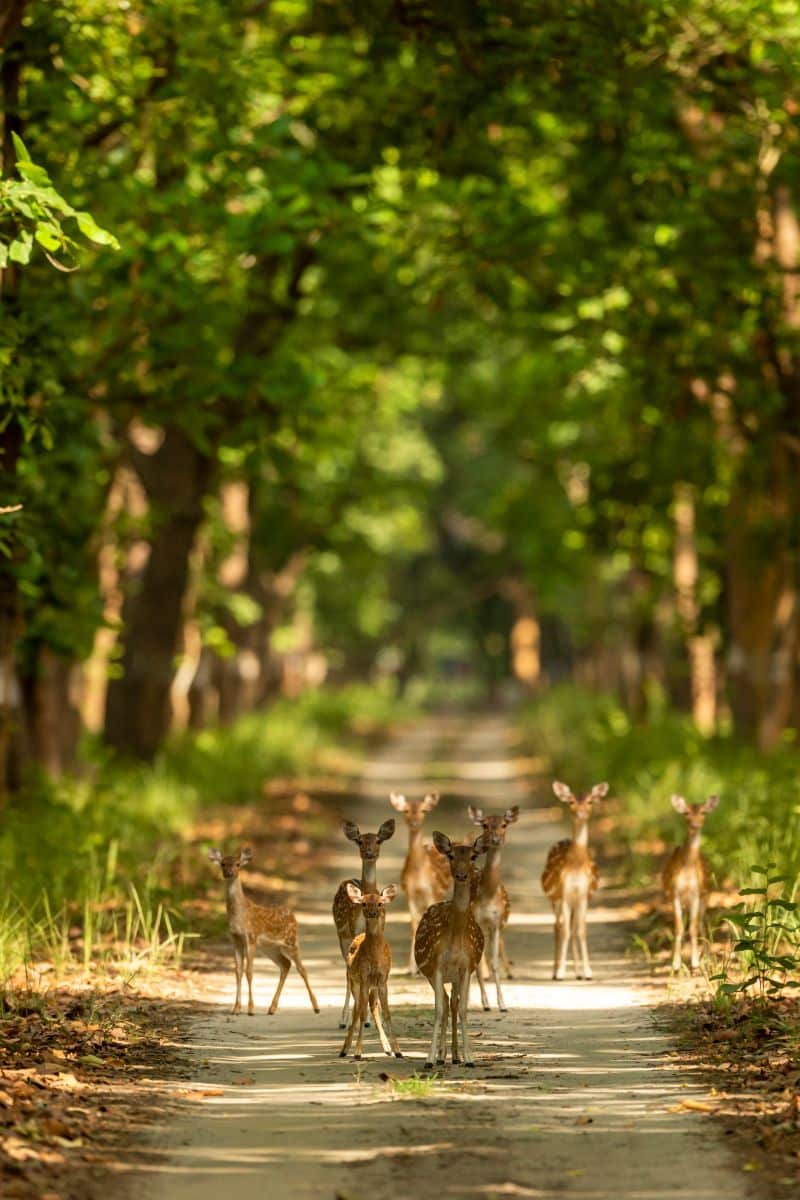
Tibetan monasteries still place a twin-deer wheel above their entrances. Jataka No. 12, the Banyan Deer, tells of a deer king who offers his life in place of a pregnant mother, and of a human ruler so moved that he spares the herd (Ancient Buddhist Texts). One scholarly note to a translation of Nagarjuna’s treatise calls the tale an invention to explain the park’s name.
Kauyumari
For the Wixárika (Huichol) people of western Mexico, the deer is Tamatsi Kauyumarie, “our older brother”, known as the Blue Deer in translations, and a Wixárika writer explains that the deer is “one and the same” with peyote and maize, the other sacred presences of that faith.
This is a present-day faith with its ceremonies intact. I mention it with respect.
Once, “deer” meant any beast
Here is the fact that surprised me most in all this research. In English before the Norman Conquest, deor meant “wild animal, beast, any wild quadruped”, and in early Middle English the term covered even ants and fish.
German Tier still means “animal” and nothing narrower. Merriam-Webster lists the word as akin to Lithuanian dvasia, “breath, spirit”, and earlier etymologists reconstruct a root for a creature that breathes. So the English name for the animal now hailed as a spirit messenger started out as a label for any thing with breath in it (a mouse or even an ant, if a Middle English scribe felt like it), which feels apt to me.
Shakespeare preserved the wide sense. In King Lear, Act 3, Scene 4, Edgar in his disguise as Poor Tom recites “But mice and rats, and such small deer, / Have been Tom’s food for seven long year” (MIT Shakespeare).
Mice as deer! The shift to a single family of hooved beasts came through the hunt, since deer were the favorite quarry of the chase. Hart descends from Anglo-Saxon heorot. Hind was the native term for the female, while doe arrived from Anglo-Saxon da, of unknown origin, which Etymonline suspects is a Celtic loan. Wilderness itself comes from wild and deor, the place of wild beasts.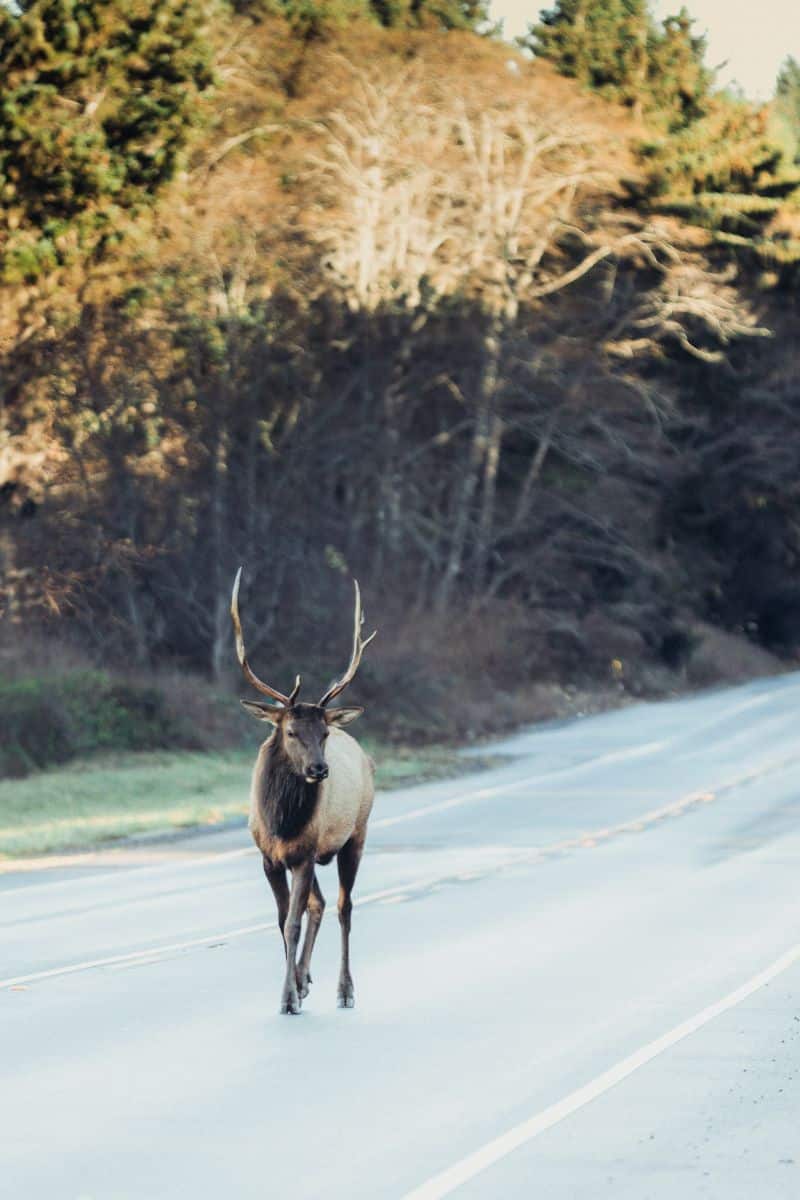
Which deer, and when?
Meaning depends of details, at least in present-day spirit-animal guides. Ted Andrews (1952-2009) wrote the volume most blogs lean on, Animal-Speak, published in September 1993, and it sold almost five hundred thousand copies. My search for the exact phrase “deer crossing your path” as an omen found no source earlier than the blogs, so what follows is current belief, labeled as such.
Dusk, or just before breakfast
Energy workers call twilight a threshold, a seam between day and night, and say a deer seen at that hour asks a person to finish a chapter cleanly before the next begins. I am split on this one. Deer move most at those hours anyway. The clock proves little, but I see why the image works.
A mother with a fawn at heel
Lightworker circles interpret this as a nudge toward tenderness, especially toward children or toward the younger self. From the Sarnath section, the Banyan Deer story offers the harder, more ancient version of that idea: care that costs something.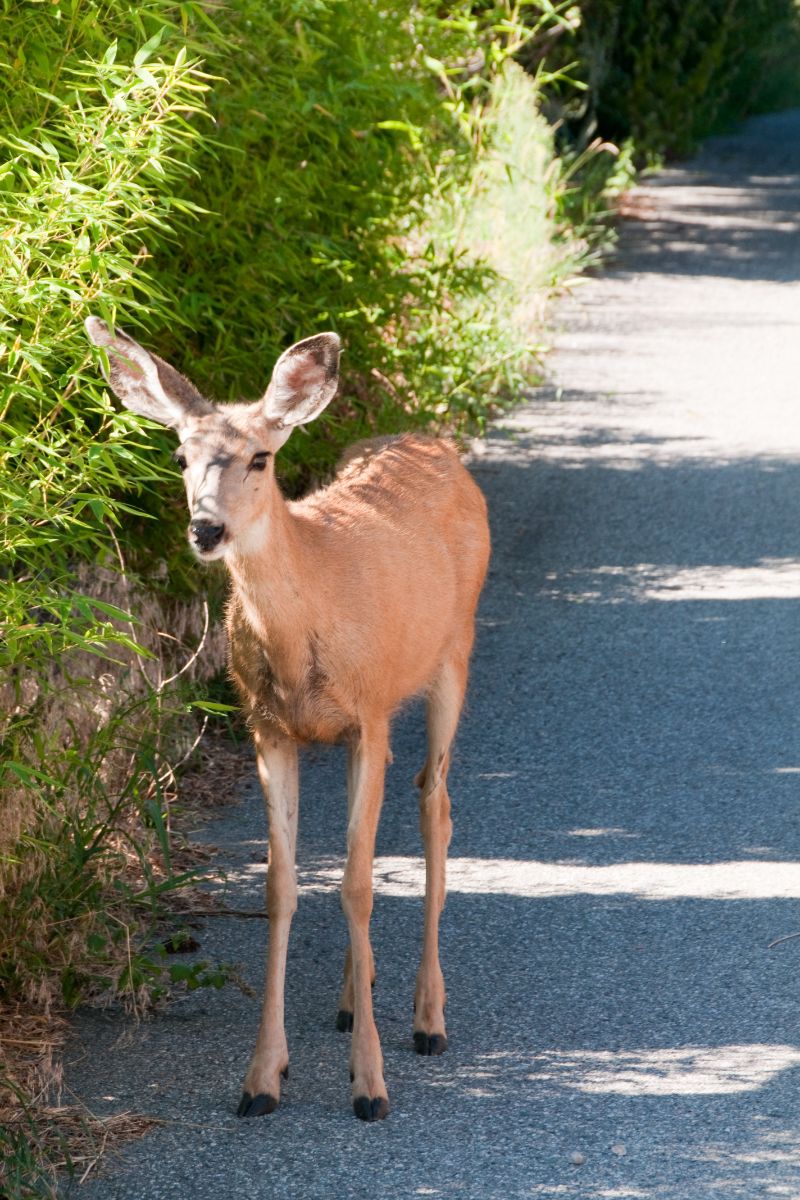
A stag in full antler
Here the Hubert legend does the work. Believers in signs treat a big buck as a summons to stop the chase, whatever chase that is, and to face the thing they have avoided. I half agree.
Several in single file
A string of deer brings Patrick’s monks to mind, protected in full view. On the practical side, a lone deer means more are close, which the road section further down explains.
White
Albino and leucistic deer are rare, and all the cultures above treat them as special. Richard II of England wore a white hart badge, and the Wilton Diptych (a small hinged altarpiece from about 1395-1399, now in London) shows eleven angels who all have that same badge. The National Gallery offers two explanations for his choice: a badge inherited from his mother, who used a white hind, and a pun on Richart, the French form of his name.
On the drive home from a funeral
Mourners tell of a deer that stops and stares at them, and some feel a loved one’s presence in it. I cannot promise that, and no tradition I found does either. That lament from the Bible section two sections up fits that drive better than any omen chart: desire put into words, with water at the end.
Here is how the main situations line up, with the source each interpretation comes from.
| Situation | Usual gloss | Where the idea comes from |
|---|---|---|
| Lone doe at dusk | a threshold, a pause | spirit-animal guides since 1993 |
| Stag at a stream | thirst for God | Psalm 42:1, KJV |
| Hind with a fawn | care that costs something | Jataka No. 12 |
| White deer | “messenger of the gods” | Kasuga Taisha, Nara |
| Buck with a crown of tines | stop the chase? | the Hubert legend |
| Deer in a dream | “pure and deep friendships” | Miller, 1901 |
| Deer on a mountain trail | balance in hard times | Habakkuk 3:19 |
| Twin deer by a wheel | the first sermon | Sarnath relief |
| Deer slain in a dream | enemies on the heels | Miller’s dream manual |
| Herd in single file | safe passage | Patrick’s “Deer’s Cry” |
| Blue deer | go-between and kin | Wixárika belief |
Night visitors: deer in dreams
Gustavus Hindman Miller (1857-1929) published Ten Thousand Dreams Interpreted in 1901, and his deer entry is short and cheerful: “This is a favorable dream, denoting pure and deep friendships for the young and a quiet and even life for the married.” Right after, he warns: “To kill a deer, denotes that you will be hounded by enemies”.
Farmers and business people who dream of a deer hunt get “failure in their respective pursuits”, a harsh verdict for a farmer who only wanted venison.
His reindeer fares better, a sign of “faithful discharge of duties, and remaining staunch to friends in their adversity”.
Calm or hurt, still or in flight
Dream interpretation today leans on the mood of the scene. In their accounts a calm deer in a glade signals peace and emotional safety, a hurt deer fragile trust, a pale one rare guidance, and a deer that bolts something delicate that slips away.
Before Miller, I hoped for a deer in Artemidorus, the second-century author of the Oneirocritica (a Greek treatise in five books and the only dream manual that survives complete from Greco-Roman times), because a source that early would have changed the whole picture for me.
What I do when one steps out
First I brake and look to the side the deer came from, because a second deer may follow, and only after the car is still do I let the symbolic part of my brain start. Small notebook lives in my glove box, and in it I write the place, the hour, the weather and whatever thought was on top at that second, since that last item is the only part I can do anything with.
Some nights the entry is a worry about money, some nights a person I owe a call. After that I say the hart verse under my breath, or nothing at all, and drive on slower than before, which, let’s be real, is half the point.
Later I look at the notebook again. Habit, mostly. Patterns show up over a season that a single encounter would never show.
November, high beams and crepuscular habits
Deer are crepuscular (most active at dawn and dusk), and that habit lines up with the rush hour once clocks change in autumn. November is the peak month. The Insurance Institute for Highway Safety puts the claim rate for animal strikes in November at more than twice the yearly average. Indiana’s wildlife agency puts its advice bluntly:
“When you see one deer assume there are more,” and it recommends high beams at night to catch the shine of their eyes (Purdue Extension). Anyone who drive rural roads in November knows that yellow diamond sign by heart.
North Dakota’s game department adds that most of these accidents happen at dawn and dusk, when deer move around the most, and it tells drivers who see a deer cross to look for a second or third deer right after it.
ALSO READ:
Spiritual Meanings of Hitting a Deer With Your Car
The Spiritual Meaning of Having a Third Nipple
- About the Author
- Latest Posts
Irina is a co-founder and author at AwakeningState.com, an online magazine launched in 2016 that aims to expand consciousness every day. Offering eye-opening articles on a range of topics, Irina strives to provide unique insights into personal growth, covering areas such as spiritual awakening, health, lifestyle, nature, and science.
My brother passed away unexpectedly. We are all in shock. Then one day a 4 point buck was walking in front of my house. He was trying to cross the road, cars going by. Then the road was clear, and he walked into over across the roadway and I was recording him. He stopped in my next door neighbors front yard. He stopped and stared at me, and then he ran in their backyard, and stayed there. We stayed up till after midnight and we did not see him come out. What could be the meaning of this?
Could mean brother watching over you as a spirit deer and saying don’t be sad I’m in better place