
What are the complete lyrics and meaning of Ide Were Were Nita Ochun chant?
Introduction
Ide Were Were is a song to the goddess Ochun, the goddess of intimacy, love, beauty, wealth, and the Mother of the African sweet or fresh waters.
In her form as the mother of salt waters, the goddess is known as Yemaya.
According to the Yoruba elders, Goddess Oshun is the “unseen mother present at every gathering” because She is the Yoruba understanding of the cosmological forces of attraction, moisture, and water.
The Yoruba people are an African ethnic group that occupies southwestern Nigeria and Benin.
They believe in a “pantheon of 401 gods,” which is known in the traditional Yoruba religion.

In the Yoruba/Cuban pantheon of goddesses and gods, the goddess is depicted as a beautiful, coquettish and charming young woman, usually with long flowing dreadlocks.
She has also been illustrated as the mother of sweet things or a maintainer of spiritual balance.
In some ancient tales, the goddess is said to be a mermaid, with a beautiful tail of a fish.
Similar to Isis (the feminine archetype for creation), Goddess Ochun brought the profound teaching of mysticism, divination, agriculture, and culture to humans.
Additionally, Ochun is known as the mother of the fishes of the seas and the birds of the forest.
According to the ancients, the goddess was the only female Irunmole amongst the original 16 sent from the spirit realm to create the world.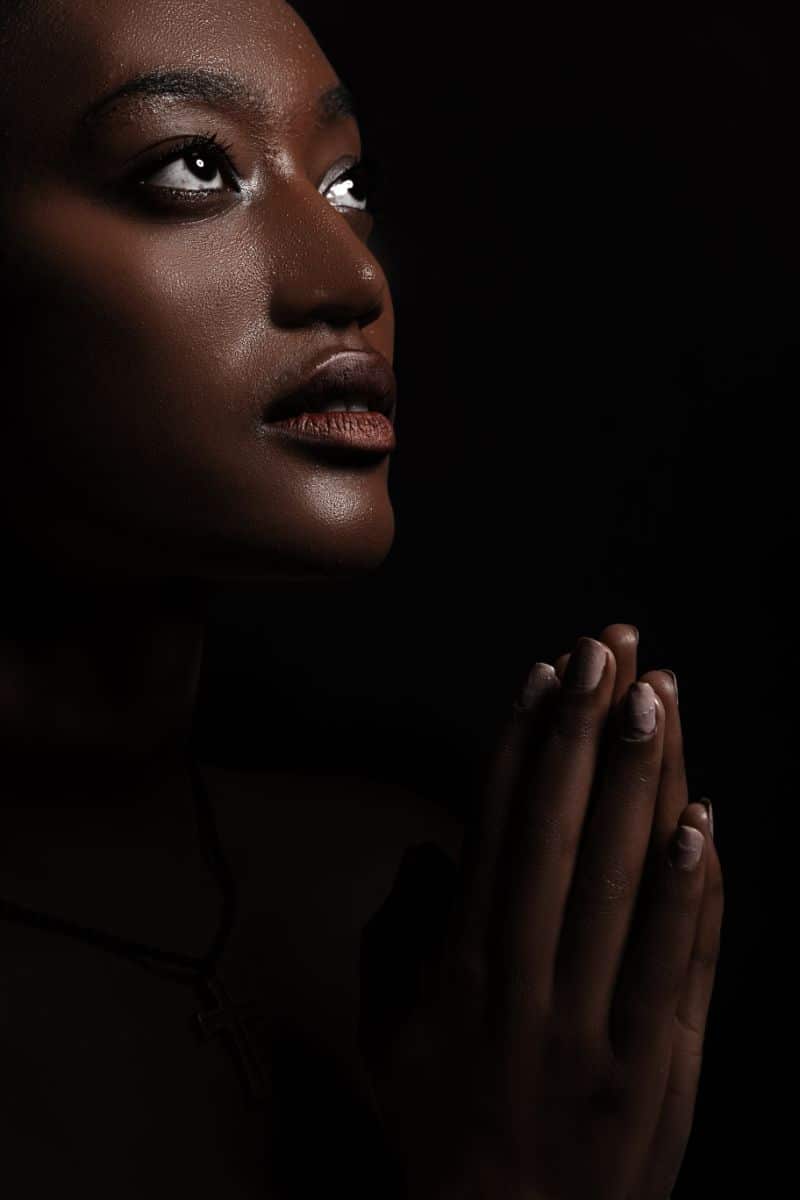
Accordingly, the Mother of the African is revered as “Yeye” — the sweet mother of us all.
Also, in the Yoruba/Cuban religious view, the goddess is linked with the color yellow, the essential metals copper and gold, mirrors, and anything of lightness, charm, beauty, and sweet taste.
ALSO READ: Om Asatoma Sadgamaya
Complete mantra lyrics:
”Ide were were nita ochun
Ide were were
Ide were were nita ochun
Ide were were nita ya
Ocha kiniba nita ochun
Cheke cheke cheke
Nita ya
Ide were were.”
The lyrics of the Ide Were Were song are simple yet powerful and evoke feelings of joy, peace, and connection with the divine feminine energy.
The song has been passed down through generations and still holds its power today.
ALSO READ: 100 Syllable Mantra – Om Benza Sato Samaya
Ide Were Were Nita Ochun song translation and meaning
”Ochun is the goddess of love chant, which speaks about a necklace which is a symbol of the initiation into love.”
Benefits

As the goddess of love, intimacy, and beauty, Ochun is often invoked in songs and prayers seeking harmony and affection. She is also the deity of rivers and fresh waters, symbolizing life’s flow and constant change.
So, a regular chant of the Ide Were Were Nita Ochun song, can help you to open up your heart (Anahata) chakra, allowing you to experience more joy, happiness, peace, abundance, prosperity, creativity, healing energy, unconditional love, compassion, understanding towards yourself as well as others around you.
It also helps you connect with your inner self on a deeper level allowing you to find clarity within yourself while also connecting with your spiritual guides.
The Power of the Mantra

The spiritual underpinnings of “Ide Were Were Nita Ochun” elevate it from a mere song to a powerful mantra.
The Yoruba people have a rich cultural tradition of using mantras as a conduit to reach the divine.
A mantra is not just a collection of words; instead, it’s a vibrational formula capable of creating a specific energy response.
In the case of “Ide Were Were Nita Ochun,” each word, each syllable, is imbued with spiritual significance.
The repetition of these sacred syllables creates a rhythm, a resonance that permeates the listener’s being.
This rhythmic repetition serves as an anchor, helping to focus the mind and clear away everyday distractions.
As one chants or listens to this mantra, a profound transformation occurs.
The mind starts to quieten, and the heart opens up, preparing the individual for a deeper state of consciousness.
This meditative state allows you to transcend the limitations of the physical world and touch the divine.
In the Yoruba tradition, Ochun represents love, intimacy, beauty, wealth, and fresh waters.
When devotees chant “Ide Were Were Nita Ochun,” they are invoking her presence, inviting her energies to infuse their lives.
This invocation is not a mere request for divine favor but a heartfelt expression of readiness to align oneself with the qualities that Ochun embodies.
It’s a call to open up to love, embrace beauty, and flow with life’s currents, just like the fresh waters over which Ochun presides.
Note – the power of this mantra lies not just in its words but in the intention with which it is chanted.
Each repetition is a step to spiritual awakening, a journey towards the divine.
With each chant, the listener moves closer to Ochun, to the qualities she exhibits, and ultimately, to a deeper understanding of themselves and the universe.
A bracelet, after all
The translation section near the top of this page talks about a necklace. That circulates on chant sheets used by most of people in Western circles, so I trusted it for a long while and only later hit a snag.
So which is it? In Lucumí practice, ide names a bracelet. Eleda, a reference site on Afro-Cuban beadwork, describes a beaded band on the left wrist that identifies a devotee’s guardian orisha.
A new initiate, called an iyawo, wears it through the whole novitiate (a probation year that follows initiation), and afterward it comes out on ritual days.
Singer Maggie Wheeler explains the song as a picture of Oshun’s servants and the brass bracelets the goddess asked them to rattle. Same post admits that “necklace of love” spread by mistake, and it quotes a writer who notes that brass never rusts.
Lead voice and chorus
Context helps here. In Cuba this chant works as call and response: a principal singer, the alpón in those Riverside notes, sings a line, and a coro answers. Three batá drums play under the voices, in a basic rhythm the same document calls cha cha lokuafun.
Western chant circles met the song through recordings. The Our Chants songbook lists two best known versions: Deva Premal on her album Love Is Space, and Carioca Freitas.
Osogbo
Nigeria has the river itself. Each August, pilgrims and tourists crowd into the Osun-Osogbo Sacred Grove, a forest on a bank of the Osun River outside the city of Osogbo, which entered the UNESCO World Heritage List on the fifteenth of July, 2005. UNESCO counts forty shrines inside it, and two palaces.
The festival opens with Ina, a sacred lamp lit at the start. Its central figure is the Arugba, a young votary maid who walks a ritual path to the goddess’s temple with a covered calabash on her head, and the procession follows her to the river.
Much of what visitors photograph in that grove came from Susanne Wenger (1915-2009), an Austrian artist who settled in Osogbo and redecorated the grove with sculptures alongside local artists.
Devotees there named her Adunni Olorisha. She is buried in the grove.
A statue that stayed dry
Cuba moved Ochun into a church, more or less.
Regla de Ocha syncretizes her with the Virgen de la Caridad del Cobre, a small statue that two Indigenous brothers and an enslaved boy found afloat at sea while they sailed out for salt.
A board fastened to the figure said “Yo soy la Virgen de la Caridad” (I am the Virgin of Charity), and by the Catholic account neither statue nor clothes were wet.
Veterans of the independence war petitioned Rome, and Pope Benedict XV declared her patroness of Cuba on the tenth of May, 1916. Her feast falls on the eighth of September. In Miami, crowds come in yellow for it, Ochun’s color.
One fact here beats anything else on this page for me. In 1954 Ernest Hemingway left his Nobel Prize medal with this Marian image at the Cobre shrine.
Peacock first, vulture later
Why do both birds show up in Lucumí lists of her animals? A story retold by the World History Encyclopedia and by Cuban culture writers answers that.
The orishas plotted against Olodumare, so the supreme being stopped the rain, and none of the male orishas managed to reach heaven to beg for it.
Ochun flew up as a peacock. On the way the sun scorched her feathers until she looked like a vulture, and Olodumare, impressed by her courage, healed her and released the rain. From that day, in this version, she is the one orisha always welcome to deliver messages to Orun.
I sorted these objects while I compared botanica notes with UNESCO files and bead guides, and several of them already came up in the Osogbo part two sections up.
| Object or sign | What it means to followers | Where I found it |
|---|---|---|
| Ide on the left wrist | which spirit guards this devotee? | Eleda bead notes |
| Covered calabash | “votary maid” on procession | UNESCO nomination file |
| Number five | five bracelets on her wrist | botanica guides |
| Vulture | the scorched peacock | the rain story |
| Wooden board | “Yo soy la Virgen de la Caridad” | El Cobre legend |
| River water | where pilgrims meet her | Osun-Osogbo grove |
| Honey | her favorite offering | botanica guides |
| Peacock | beauty before the climb | the rain story |
| Yellow cloth | her color at feasts | Miami feast crowds |
| Nobel medal | a novelist’s gift? | Cobre shrine, 1954 |
What I do when the tune won’t leave my head
Mostly I sing it as call and response, with whoever is in the room.
One voice sings “Ide were were nita Ochun,” the rest answer “Ide were were,” and after a few rounds the loop runs on breath alone. How long it lasts depends of the room.
Botanica guides suggest to put five orange segments with honey on a plate for her. I do the fruit and skip the candles.
A store bracelet stays off my wrist. A Lucumí house give the ide to initiates in ceremony, and a shop copy on my arm would claim a rite I never went through.
Do I need initiation to sing it?
Open chant circles sing it worldwide without any. Initiation matters for ritual objects such as the ide and the bead necklaces, which come through ceremony in Lucumí houses.
Image source – NickSpinder/Shutterstock.com
READ MORE: Sat Patim Dehi Parameshwara Mantra
- About the Author
- Latest Posts
Irina is a co-founder and author at AwakeningState.com, an online magazine launched in 2016 that aims to expand consciousness every day. Offering eye-opening articles on a range of topics, Irina strives to provide unique insights into personal growth, covering areas such as spiritual awakening, health, lifestyle, nature, and science.
I’m on a spiritual journey, it brought me here
<3
This made me smile. I’ve been in a journey for sometime and am here at this river and feeling better than earlier and it brought me here, only to learn more about my mother ochun. So much evolution and challenge. If you are reading this regardless of time. Pave your path learn as you go, divine timing can be years or months… trust the process and May oshun bring love and restore happiness when you are lost and sad. And May love always prevail.
As to am I on my spiritual journey and I was lead here. Listening to this song for the first time I broke down in tears as I envisioned being circled by woman (I’ll call them my sisters) and they chanted this to me. I understood that they were telling me to free myself. They were empowering me. After listening I had to find out what the lyrics actually meant and to find out it’s an initiation into love…. My heart is filled
The above translation is incorrect or at least incomplete and has since been copied all over the internet. Years ago, I was able to google and find a word for word or as close as one can get to it translation that went line by line. It was something about “Look at how she wears the necklace. She wears it well.” That’s all I can remember. I wish I could find that webpage again. It was not affiliated with a yoga studio as most are but an actual Yoruban based linguistic source. It’s nice to know what you’re actually saying word for word and the above is not accurate, thus a disservice to the Yoruban people. I truly love this chant and would like to know what the words mean in English to be able to chant mindfully.
Dear Sara, what a beautiful and thoughtful words, thank you. This song moves my heart, I’ve learned it yesterday. I too prefer to know the meaning of words I am saying or singing – please, if you find proper translation, let us know dear being.
I couldn’t agree with you more and commend you for speaking your honest feelings. You definitely are speaking from my mindset for months. I have been searching high and low for people of their culture. No hope and google is not helping for once. I’m just as lost but I can’t help but sing along!
I broke down the 1st time I heard this. I am overcome with tears everyday that I listen. I have got to know what this means.
I love this song
My name is Nita, and I came upon this song by looking up what does my name mean in Yuroba. Ochun has come to me several times throughout my life, most recently through a deep yellow beautiful citrine crystal beaded necklace. I listened so much that it reverberates throughout the day in my head, I love it. I allow it to put me to sleep at night and awaken me early day. And Yemeya, presented herself to me thru an essential oil I purchased from an old candle shop in the D back in the day. I have been on a spiritual journey awakening to my true self my entire life this lifetime…ASE’